
Cactoida
Template:Quote Cactoida are a species of alien organism found on planets and moons with thin atmospheres across the galaxy. They can be sampled with the Genetic Sampler and scanned with the Short Range Composition Scanner.

Distance
They have a clonal colony range of 300 m (between 2 genetic samples).
Description
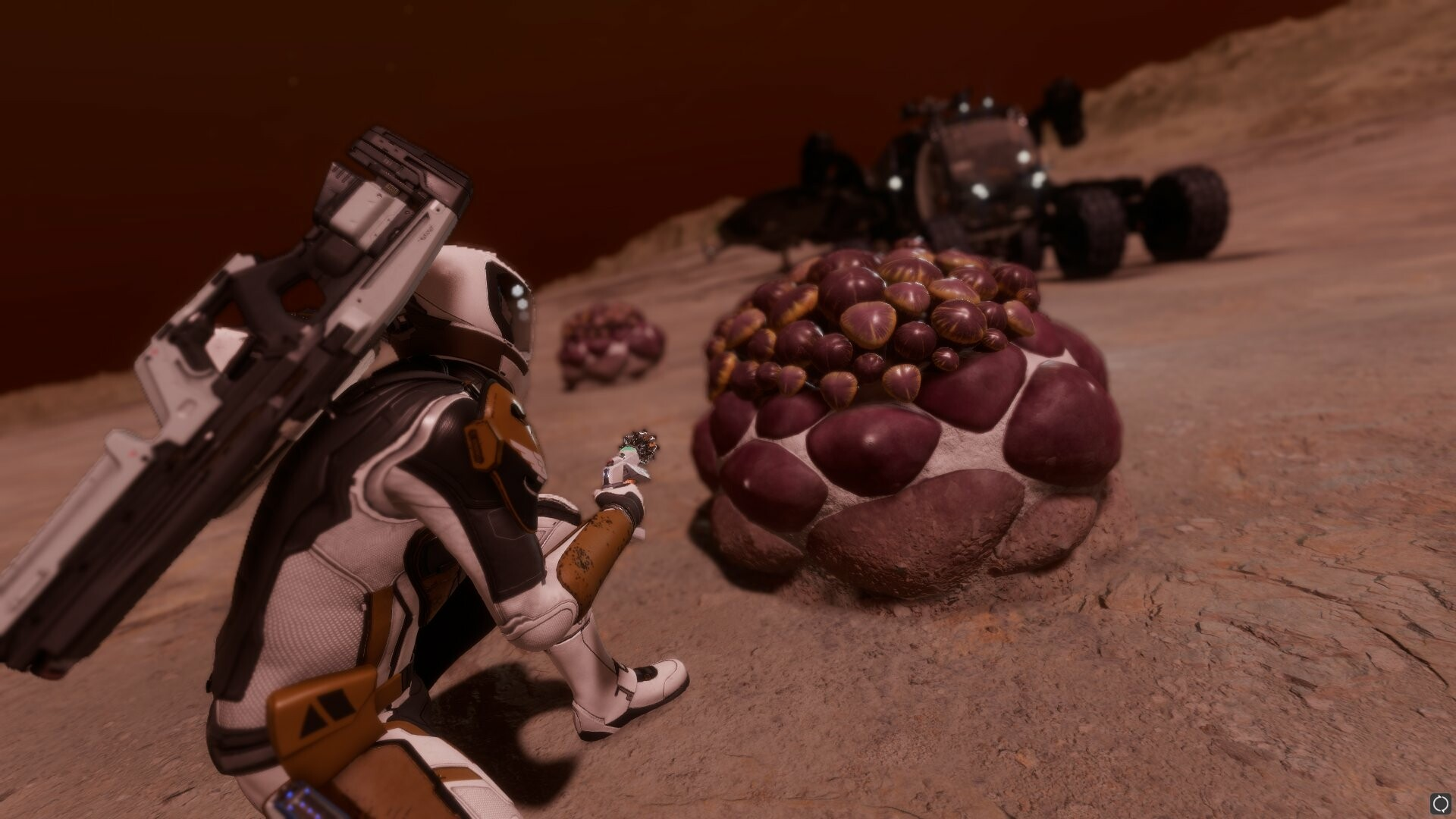
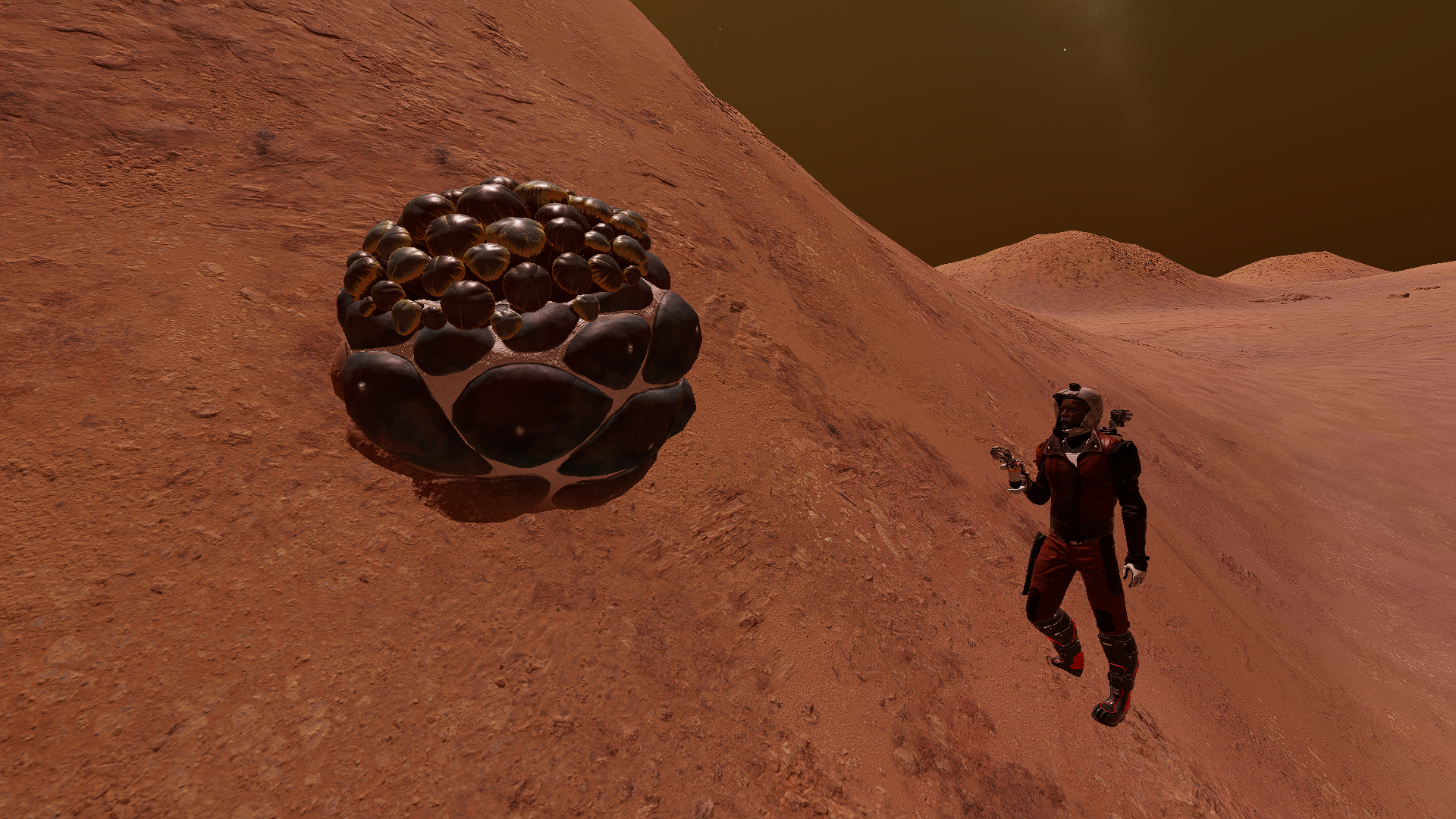
Cactoida are named after their resemblence to cacti. They appear on rocky hills and appear as small, round, pebble-like things from afar.[1]
Conditions of occurrence
- Planets with thin Carbon dioxide, Ammonia or Water atmosphere
- Because of atmospheres types: only on Rocky or High Metal Content planets
- Maximum gravity: 0.27
| ATMOSPHERE TYPE | SPECIES |
|---|---|
| Ammonia | Cactoida lapis
Cactoida peperatis |
| Carbon dioxide
Carbon dioxide rich (180 K - 195 K) |
Cactoida cortexum
Cactoida pullulanta |
| Water | Cactoida vermis |
Types
There are five known types of Cactoida with differing base values:
| SPECIES | VALUE |
|---|---|
| Cactoida Cortexum | 3,667,600 |
| Cactoida Lapis | 2,483,600 |
| Cactoida Peperatus | 2,483,600 |
| Cactoida Pullulanta | 3,667,600 |
| Cactoida Vermis | 16,202,800 |
Colored variants
Colored variant determined by the parent star type for all species of Cactoida genus :
| STAR TYPE | COLOR |
|---|---|
| O | Grey |
| B | |
| A | Green |
| F | Yellow |
| G | Teal |
| K | |
| M | Amethyst |
| L | Mauve |
| T | Orange |
| TTS | Red |
| Y | Ocher |
| W | Indigo |
| D | Turquoise |
| N | Sage |
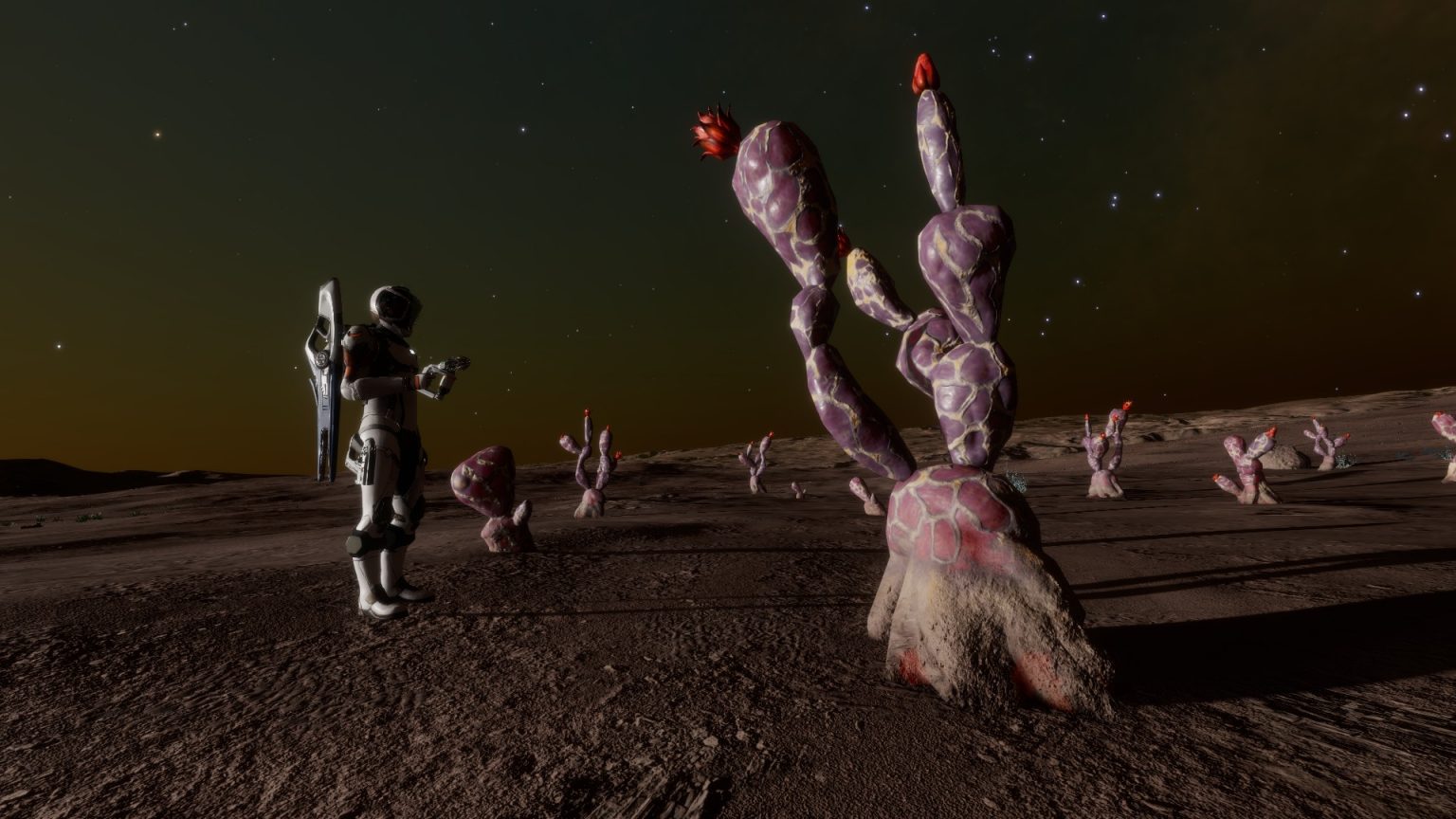
Cactoida cortexum
Description
A species of cactoid that can reach over three metres in height. They are composed of multiple growths that sprout sealed pods at their peaks, which open up to distribute seeds.
Conditions of occurrence
- Planets with thin Carbon Dioxide atmosphere
- Maximum gravity: 0.27
- Mean temperature between 180 K and 195 K
Cactoida lapis

Description
This cactoid species appears as a squat growth with a latficecl upper surface, which eventually produces a cluster of seed pods.
Note: due to a debate about who made the first discovery, there is a second Latin name for this species: Tetonus aymericus. For reasons of consistency in nomenclature, and probably also because of a certain prudery, Vista Genomics uses only the name Cactoida lapis. However, in order to be completely fair, we report this synonym here.
Conditions of occurrence
- Planets with thin Ammonia atmosphere
- Maximum gravity : 0.27
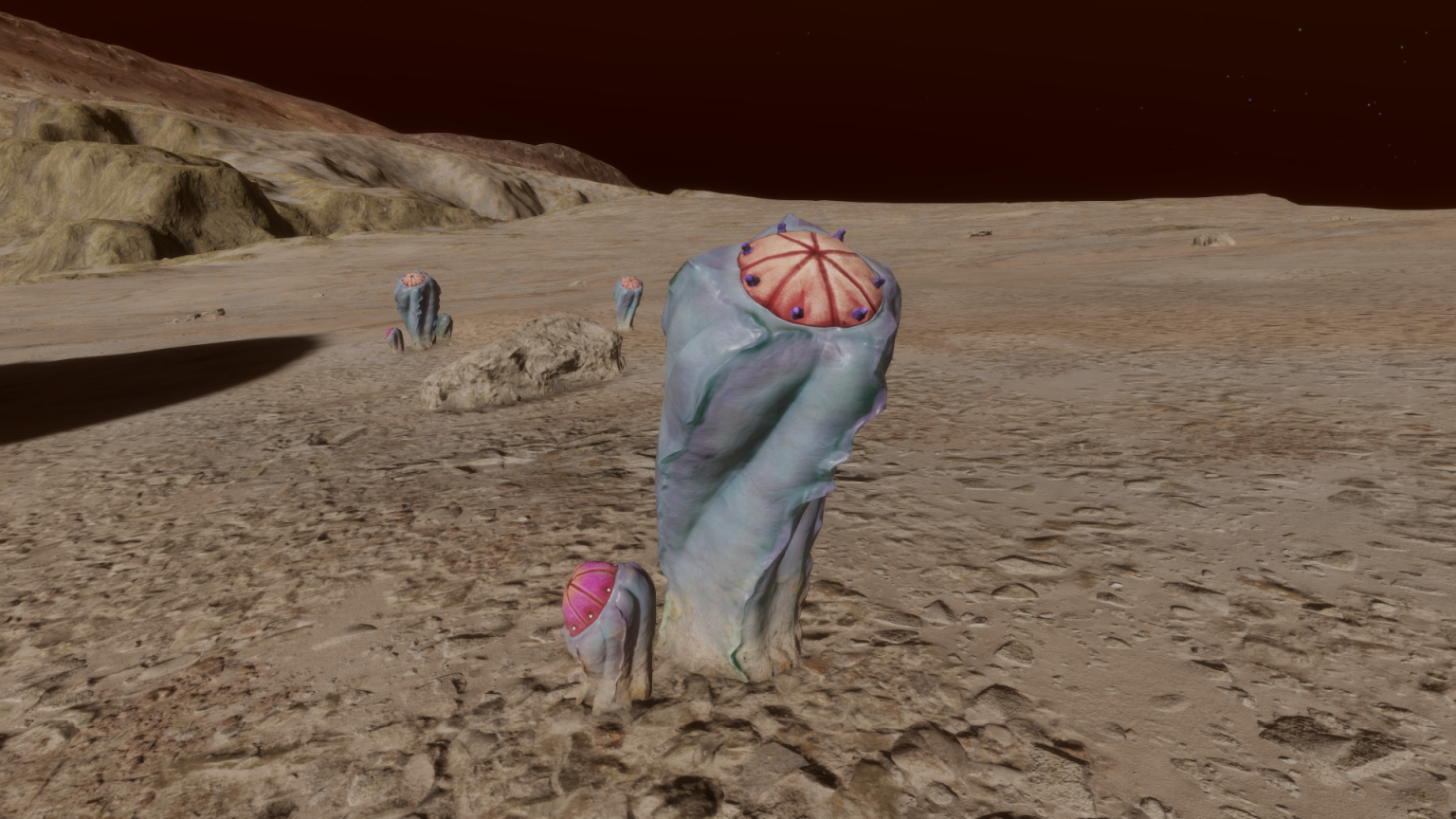
Cactoida peperatis
Description
A cactoid species appearing as a swollen five-sided growth, reaching over two metres high and topped with an intersected crown.
Conditions of occurrence
- Planets with thin Ammonia atmosphere
- Maximum gravity : 0.27
Cactoida pullulanta
Description
This species of cactoid has a globular base, from which extend vertical cylinders that can reach over four metres. Rounded pods grow in clusters along the cylinders, which break open to scatter seeds.
Conditions of occurrence
- Planets with thin Carbon Dioxide atmosphere
- Maximum gravity : 0.27
- Mean temperature between 180 K and 195 K
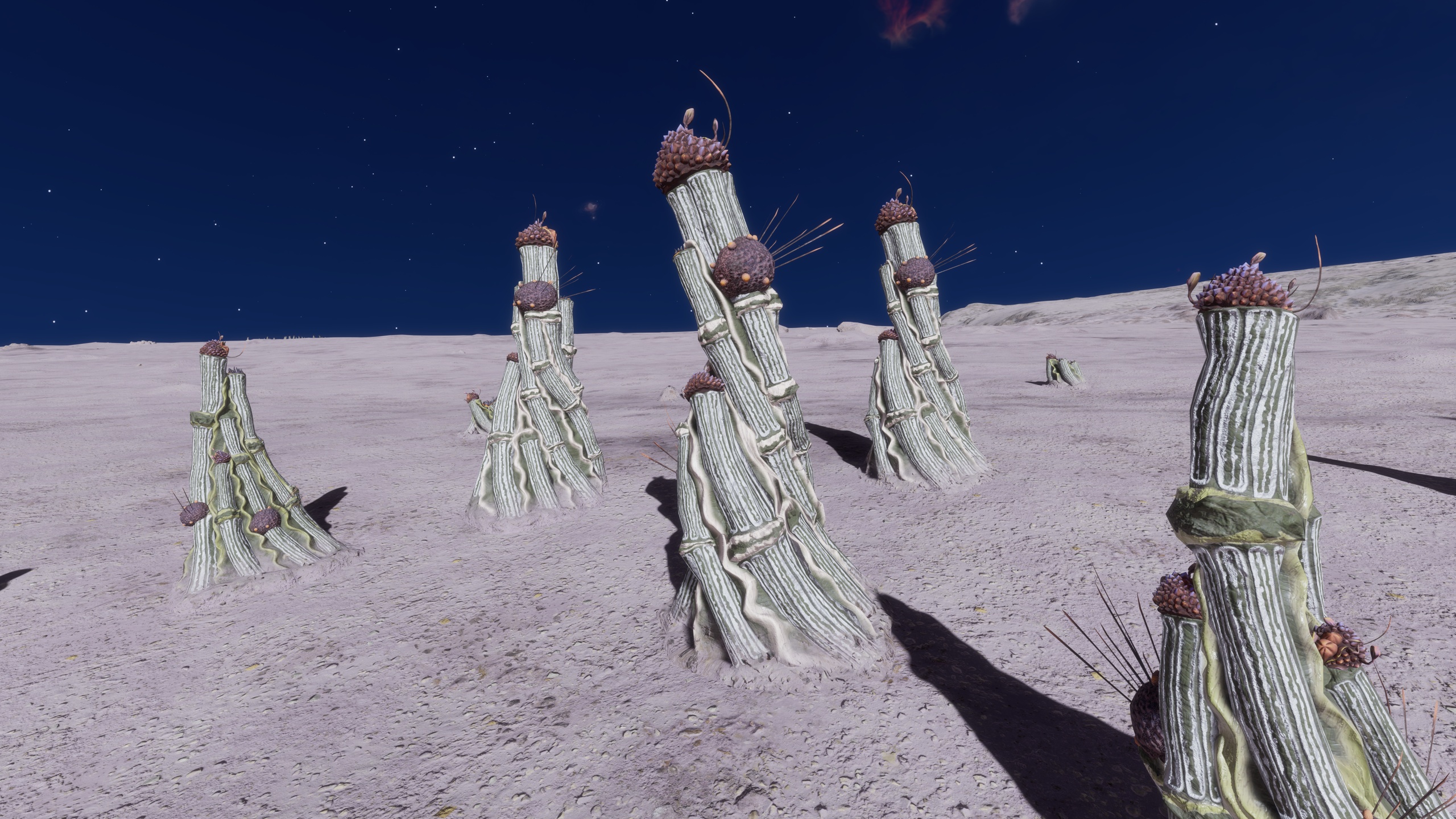
Cactoida vermis
Description
These cactoids appear as a tall collection of cylinders linked by an undulating membrane and topped with a spiky crown. They often have a spiny life-form attached that is thought to form a symbiotic relationship with the larger organism, although the nature of this is not understood.
Conditions of occurrence
- Planets with thin Water atmosphere
- Maximum gravity : 0.27
Locations
| System | Planet | Coordinates | Type | Reported By |
|---|---|---|---|---|
| Eolls Priae ZQ-C d13-13 | 10 D | -22.444, -123.642 | Pullulanta | CMDR Methan Disery |
| Plua Aewsy XS-S c4-9 | B 2 | -8.4888, 80.7406 | Vermis | CMDR Methan Disery |
Notes
- Cactoida were introduced in Elite Dangerous: Odyssey.
Gallery
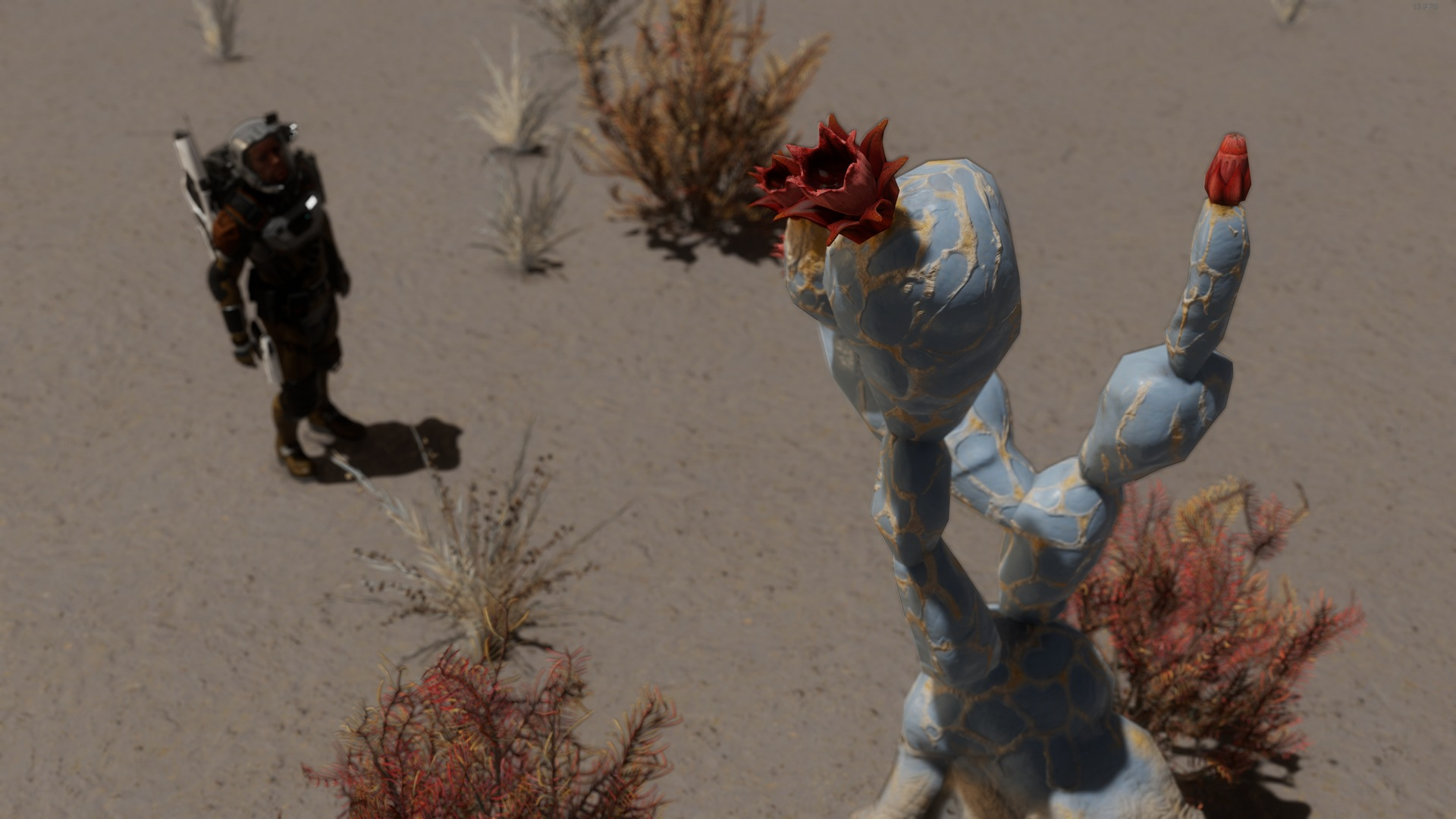
- Cactoida Cortexum
- Cactoida Lapis
- Cactoida Lapis - Amethyst
- Cactoida Lapis - Teal
Template:SpeciesNavbox Template:PointsofInterestNavbox ru:Кактусоиды
- ↑ CMDR VitoRazoR, Exobiology - a 2023 updated guide