
Concha
Concha are a genome of alien flora found on planets and moons with thin atmospheres across the galaxy. They can be sampled with the Genetic Sampler and scanned with the Short Range Composition Scanner. They have a clonal colony range of 150m.

A concha species that thrives in atmospheres rich with carbon dioxide. The lip-like upper opening cracks apart to allow a vertical growth of spiky leaves and bright seeds to stretch upward.
— In-Game Description
Description
Concha are named after mollusk shells, which they resemble. They are very small and appear on hills and rocky terrain.[1]
Types
There are four known types of Concha with differing base values:
| SPECIES | VALUE |
|---|---|
| Concha Aureolas | 7,774,700 |
| Concha Biconcavis | 19,010,800 |
| Concha Labiata | 2,352,400 |
| Concha Renibus | 4,572,400 |
Distance
Minimum distance between two genetic samples: 150 m
Conditions of occurrence
- Planets with thin Ammonia, Nitrogen, Water or Carbon Dioxide atmosphere
- Maximum gravity: 0.27
| ATMOSPHERE TYPE | SPECIES |
|---|---|
| Ammonia | Concha aureolas |
| Carbon dioxide
Carbon dioxide rich |
Concha labiata (< 190 K)
Concha renibus (180 K - 195 K) |
| Nitrogen | Concha biconcavis |
| Water, Water-rich | Concha renibus |
Concha aureolas

Description
These concha are found on worlds with nitrogen-based atmospheres. Their rounded rock-like structure splits part to extend long stalks topped with loops.
Conditions of occurrence
- Planet with thin Ammonia atmosphere
- Maximum gravity: 0.27
Colored variants
Colored variant determined by the parent star type
| STAR TYPE | COLOR |
|---|---|
| O | |
| B | Indigo |
| A | Teal |
| F | Grey |
| G | Turquoise |
| K | Red |
| M | |
| L | Orange |
| T | |
| TTS | |
| Y | Yellow |
| W | |
| D | |
| N | Emerald |
Concha biconcavis

Description
This concha species resembles a ridged, bisected egg until they crack in half, allowing a thin stalk to sprout from its fleshy insides. This is covered with cloughnut—shaped pods that create locations for chemical exchange.
Conditions of occurrence
- Planet with thin Nitrogen atmosphere
- Maximum gravity: 0.27
Colored variants
Colored variant determined by rare material found on planet:
| MATERIAL | COLOR |
|---|---|
| Antinomy | Peach |
| Polonium | Red |
| Ruthenium | Orange |
| Technetium | |
| Tellurium | |
| Yttrium |
Concha labiata

Description
A concha species that thrives in atmospheres rich with carbon dioxide. The lip-like upper opening cracks apart to allow a vertical growth of spiky leaves and bright seeds to stretch upward.
Conditions of occurrence
- Planet with thin Carbon Dioxide atmosphere
- Maximum gravity: 0.27
- Mean temperature inferior to 190 K
Colored variants
Colored variant determined by the parent star type
| STAR TYPE | COLOR |
|---|---|
| O | |
| B | Indigo |
| A | Teal |
| F | Grey |
| G | Turquoise |
| K | Red |
| M | |
| L | Orange |
| T | |
| TTS | |
| Y | Yellow |
| W | Lime |
| D | |
| N | Emerald |
Concha renibus

Description
A species of concha that relies on heat sources to survive. As the bisected growth increases in size. it sprouts a single stalk topped with an array of luminous fronds that facilitate metabolism.
Conditions of occurrence
- Planet with thin Carbon Dioxide or Water atmosphere
- Maximum gravity: 0.27
- For Carbon dioxide, mean temperature between 180 K and 195 K
Colored variants
Colored variant determined by rare material found on planet:
| MATERIAL | COLOR |
|---|---|
| Cadmium | Red |
| Mercury | Mulberry |
| Molybdenum | Peach |
| Niobium | Blue |
| Tungsten | White |
| Tin | Aquamarine |
Locations
| System | Planet | Coordinates | Type | Reported By |
|---|---|---|---|---|
| Kadaren | 6 B | -28.4696, 119.4512 -67.4296, 83.4881 |
Renibus | CMDR R0ss |
| Gru Eoq XM-P c20-2 | 6 C | 10.2977, 83.9385 | Labiata | CMDR Methan Disery |
| Traileia OS-B D13-7 | 1 A | -0.3692, -67.4371 | Labiata | CMDR Quadios |
| Bleia Eohn KD-Z d1-64 | 8 H | -30.1514, 175.8224 | Renibus | CMDR GOM Collective |
| Bleae Thua GN-B D13-32 | AB 5 B | -37.7929, 5.3414 | Renibus | CMDR PatePeluri |
Notes
- Concha were introduced in Elite Dangerous: Odyssey.
Gallery
 Concha Labiata

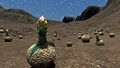 Concha Labiata - Turquoise
 Concha Aureolas - Red
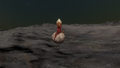 Concha Labiata - Red
 Concha Renubus - Aquamarine


References
- ↑ CMDR VitoRazoR, Exobiology - a 2023 updated guide
<verbatim>wk-style-navbox</verbatim>
<verbatim>wk-style-divclose</verbatim> <verbatim>wk-style-navbox</verbatim>
<verbatim>wk-style-divclose</verbatim>