: Yes, just like in the last two Elite games, [https://www.youtube.com/watch?v=Fv0Tj-UGOtY&t=440 Frontier: Elite 2] and [https://www.youtube.com/watch?v=z0_WewBEGew&t=265 Frontier: First Encounters (Elite 3)], planets and moons [https://www.youtube.com/watch?v=j77gOdFFFyo&t=1064 will orbit and rotate in 1:1 scale real-time] and [https://www.youtube.com/watch?v=GEVutbSqBI0&t=477 tilt will affect their seasons.]
: Yes, just like in the last two Elite games, [https://www.youtube.com/watch?v=Fv0Tj-UGOtY&t=440 Frontier: Elite 2] and [https://www.youtube.com/watch?v=z0_WewBEGew&t=265 Frontier: First Encounters (Elite 3)], planets and moons [https://www.youtube.com/watch?v=j77gOdFFFyo&t=1064 will orbit and rotate in 1:1 scale real-time] and [https://www.youtube.com/watch?v=GEVutbSqBI0&t=477 tilt will affect their seasons.]
: This '''affects gameplay''', since you will have to '''match the orbital velocity of the celestial bodies and stations''', manage '''changing fuel requirements''' and '''gravity will also distort the direction of travel during [[Elite: Dangerous FAQ#How will we travel those vast distances in such a huge glaxy.3F|freeform flight.]]'''
: This '''affects gameplay''', since you will have to '''match the orbital velocity of the celestial bodies and stations''', manage '''changing fuel requirements''' and '''gravity will also distort the direction of travel during [[Elite: Dangerous FAQ#How will we travel those vast distances in such a huge glaxy.3F|freeform flight.]]'''
: Full orbital periods will be noticable in a short time for [http://www.space.com/22451-fastest-earth-size-lava-planet-kepler78b.html many celestial bodies] and you will also be able to view them at a faster rate in the [http://us2.campaign-archive2.com/?u=dcbf6b86b4b0c7d1c21b73b1e&id=ffe2385d13#1 Orrery view].
: Full orbital periods will be noticable in a short time for [http://www.space.com/22451-fastest-earth-size-lava-planet-kepler78b.html many celestial bodies].
:
----
----
Line 521:
Line 520:
Screenshot_0090.jpg
Screenshot_0090.jpg
</gallery>
</gallery>
----
===Will I be able to create multiple pilot characters for my account?===
: '''Yes''', you will be able to do so. ''(citation needed)''
The subtitle "Dangerous" refers to the 3rd best Elite Rating you could achieve during combat in the Elite games. In the new game it has been expanded to include more than combat.
Pilots will be breaking blockades, battling pirates, attacking enemy positions and installations, and more, leaving their mark wherever they go.
All actions will change history of human kind.
Free-form play allows everyone to choose their own path, becoming an angry pirate, a spy, a peaceful trader, an explorer, a soldier, or a mix between these roles.
Specially handcrafted overrides for 160,000 known stars in the night sky and planetary objects that we know and love. For example, our solar system with Earth, Moon and Mars, other systems with recently discovered planets, etc.
Freeform (manual yaw/pitch/roll) interplanetary flight allows to fly freely through star systems in realistic scale to get to a destination. Players can choose to travel wherever they want, including vista points to see Earth rise on the moon, or sun appearing behind of Mars. Or they could choose to explore the vast expanse of space and discover new points of interest in star systems.
What are the minimal system requirements to run "Elite: Dangerous"?
While the full release of Elite: Dangerous will be available on both Windows PC and three months later on Apple Macintosh computers. Everyone who bought the Elite: Dangerous, will be able to download the game for Windows and/or Macintosh computers once it is available, at no extra charge.
Development of the game is ongoing, and so recommended specifications are currently only available for the Beta builds.
Direct X 11
Quad Core CPU (4 x 2Ghz is a reasonable minimum)
2 GB System RAM (more is always better)
DX 10 hardware GPU with 1GB video ram
Internet connection
Supported Operating Systems:
Windows 7.x
Windows 8.x
For the final game the minimum hardware specifications may be lower as further code optimisations are completed.
Are there plans for other platforms to be supported?
Frontier Developments have confirmed that they are evaluating support for the next-gen console platforms XBox One and Playstation 4[1] and also Linux desktop[2], but the initial release is only planned to support Windows and Mac OS X.
Does "Elite: Dangerous" support Physically Based Rendering (PBR)?
Short answer: yes it does. Elite: Dangerous adopted a physically-based rendering (PBR) model right from the start - we want it to look as good as possible under a variety of lighting conditions (and space certainly gives you that!). We expect the visual quality of Elite: Dangerous will continue to improve as we progress through development. It's worth mentioning though that PBR isn't a one-size-fits-all solution as much as it's the start of a discussion that could probably occupy someone for their entire career - kind of like the way "High Dynamic Range" was quickly adopted by everyone years ago but people are still arguing over the fine details!
Yes, the modules all have a position in or on the ship, and some calculations are done based on your armour to decide if there's any penetration at all (which gets more likely as your armour gets beaten up), then how far it's likely to penetrate and which modules are along the path of that penetration and might take damage (there's several more subtle rules, but that's the broad strokes). [3]
Super cruise (or frame shifting) is used for freeform (manual pitch/yaw/roll) travel within star systems. The maximum speed will vary based on proximity to celestial bodies, up to 2001 times the speed of light (2001C) that will rarely be reached, to be able handle the most extreme spatial distances. It will consume fuel and you will also be able to see other ships that are super-cruising within a star system from a long distance away visually and with long range sensors and also do combat maneuvering to perform interdictions.[4][5]
Hyperspace drives are used to travel from anywhere between star systems. Hyperdrives with different ranges, charge up times and fuel consumption parameters are available, and so your particular model of hyperdrive governs your specific ability to move around the galaxy. The game will ensure that you will get grouped with other ships near the largest mass (star) during hyperspace exit. There will also be ways to follow each other's hyperspace trail.
How are players going to meet each other in such a huge galaxy?
Most of the action will take place within the human populated core systems of the major factions and because of the way interstellar hyperspace travel works, the game will ensure that you will get grouped with other ships near the largest mass (star) during hyperspace exit. You will also be able to find other ships that are super-cruising within a star system from a long distance away visually and with long range sensors.
There will also be ways to follow each other's hyperspace trail.
Having such a large quantity of star systems permits the game to have many major discoveries and many more minor ones, enough for hundreds of thousands of players to experience the opportunity of unique finds without the feeling of tripping over the Ark of the Covenant every two minutes.
Yes, missions fall into several types, the ones that you find en route and the ones that will have you actively engage in through a contract. These can earn you both credits and status within the organisation you are working for, whether it is a disreputable criminal group or the Federation or Empire themselves. Initially these will be arranged either through direct messages or on a common message board. More details to follow.
Just like in all the previous Elite games, you are not fixed to a specific role like in a traditional roleplaying game, there are also no skillpoints that directly affect the way your avatar performs. Instead you will always be directly in control of your avatar so your own skill will determine the outcome of your interactions.
The story wasn't explicitly told with traditional cut-scenes, but unfolded from a first person perspective with the help of news events and corresponding missions.
The game will also have more than 13 official book tie-ins to tell different stories about Elite universe, with lots of places, events and people referenced in the game.
In addition to this the Elite universe does have an extensive background history which is covered in many different sources, like In the official novellas - The Dark Wheel from Elite, Stories of Life on the Frontier Life On The Frontier and The Gazetteer from Frontier: Elite 2, and Further Stories of Life on the Frontier from Frontier: First Encounters which can all be found in the following links [6][7][8] .
Their loyalty will depend on their morality and faction connections, so they will be able to betray you, or simply refuse to engage in certain criminal acts.
Future expansions will also add the posibility to seamlessly freeformland on planets. Landing and docking will be doable either using auto pilot, or manually. Additionally to simply flying into a station's door, in E:D you'll have to fly and land your ship onto the landing pad within the station.
Q: Star Citizen is using cry engine, while Elite is using an unique engine of its own. What advantages and disadvantages do you have, when using a homemade engine, while making the space simulator?
A: As a developer we’ve used our own game engine throughout the company’s history so we have considerable experience in our own technology. For Elite: Dangerous the game presents a number of challenges that we have to solve. The first (and most obvious) is the scale of the game, putting aside the requirements of procedural generation for a moment the spatial size of the game’s locations are an immense (pun intended!) problem. It’s quite common in space games to fudge the scale to make things look good and work, however this results in spatial locations being condensed. In Elite everything is the scale it should be, so the planets are the correct size and distances between objects are also correct. Using the Cobra engine means that we can tailor our solutions to fit the game rather than the other way round.[9]
This affects gameplay, since you will have to match the orbital velocity of the celestial bodies and stations, manage changing fuel requirements and gravity will also distort the direction of travel during freeform flight.
Does the "Elite: Dangerous" developer Frontier Developments have enough expertise to pull off such an ambitious project?
It's very hard to measure "success" or "pulling off" a project objectively, because in the end the game will be judged not only by it's technical merits, but also subjectivity by the player. So we can really only talk about technical expertise. As the game conceptually is almost a technical marvel, it will be easy to measure.
First of all, leader of Elite: Dangerous is David Braben, who was co-author of the original Elite, and sole creator of the first sequel and lead developer of the second sequel. While sequels have been given mixed reviews, the majority of people who have played them agreed that both titles succeeded to give the immersion of space travel and succesfully emulated all the issues associated with that.
Before Elite: Dangerous, David Braben and his company have also produced a lot of high class games, like RollerCoaster Tycoon 3 and Coaster Crazy, the Lostwind series, Kinectimals, and most recently the 1st party XBox One title, Zoo Tycoon, which can give you the impression of craftmanship of the Frontier developers and technical capablities of in-house software tools.
Frontier uses their in-house COBRA engine for all their game development, and now they have started to license it to other development houses.
Elite: Dangerous uses a mix of procedural generation with artist direction, this means that they don't need to hand create all their star systems, they just need to be sure that all the special overrides, the event system, etc works in one place and therefore it will work in the rest of galaxy. As Frontier has already worked with this concept for all previous Elite games and many more recent games, Frontier as a company has the knowhow to deliver such a product.
For example, why would you pilot space ships yourself, when the most efficient way to make money and progress in a game is to sit back in an office and hand out commands?
It's also problematic from a lore and immersion standpoint, since the game is simulating realistic societies, social structures and time scales, so building an empire would involve a lot of resources and politics that only big nations can afford and would stretch over months or years, even building a large space station can take a month or more.
What are the general differences between "Elite: Dangerous" and "Star Citizen"?
The differences are predominantly in issues surrounding scale, complexity of background simulations, adherence to recognised science of the universe and release schedule.
Both Elite: Dangerous and Star Citizen will have an on-going background story which will be influenced by the players and augmented with developer injected events.
Elite: Dangerous has lightspeed pulse and beam lasers on all ships fitted with energy weapons, as opposed to Star Citizen which has slow moving beam weapons only on capital ships. The remainder of the Star Citizen fleet will have slow moving laser bolts like one would see in Star Wars.
In Star Citizen, planetside movement will be restricted to specialized locations, connected by scripted sequences, such as star ports, small city hubs, bars and FPS arenas, while the rest of the planet is off limits.
There are major differences in how each game handles close combat flight (as you can see from this video). There is an inherent flaw with the premise of close combat space flight, leading to endless turreting and circle-strafing especially in PVP multiplayer due to the lack of terrain features in mid space, compound that with the fact that Elite also features lightspeed pulse and beam lasers making this issue even more apparent.
Elite: Dangerous deals with this by limiting the yaw rate and enforce an optimum corner speed by way of thruster placement and limits in the flight control computer, forcing to roll and then pitch to get the most efficient turn rate (less efficient, but most comfortable for a human pilot), in addition there is a G-LOC system, a preliminary version can be seen here.
In Star Citizen ships can be pointed more intuitively in a fashion akin to FPS, requiring a strong yaw (most efficient, but discomforting for a human pilot). It deals with turreting by having a G-LOC system as seen here, but this alone doesn't alleviate the problems completely, but it is less critical due to the lack of lightspeed lasers on the smaller ships.
Multiplayer:
Multiplayer is handled with a grouping system in Elite: Dangerous and a PVP-PVE slider which doesn't completely control engagements in Star Citizen.
Another major difference is that in EVE everybody within a star system is in one big instance and when there are too many people within it they slow down the update rate of the game.
Due to a lot less network traffic, this allows Elite: Dangerous to have twitch based action instead of classic MMO click 'n' roll (where actual world updates are comparitively slow depending on server load and all attacks are caculated on servers using modified D&D system) which is used in EVE.
That means that Elite: Dangerous combat is twitch skill based.
Another important difference is that EVE has a lot of empire building and RTS elements, while Elite is what it would be like to be a spacefarer in a galaxy from a first person’s perspective.
There is an inherent flaw with the premise of close combat space flight, leading to endless turreting and circle-strafing especially in PVP multiplayer, due to the lack of terrain features in mid space, compound that with the fact that Elite also features lightspeed pulse and beam lasers making this issue even more apparent.
Elite: Dangerous deals with this by limiting the yaw rate and enforce an optimum corner speed by way of thruster placement and limits in the flight control computer, forcing to roll and then pitch to get the most efficient turn rate (less efficient, but most comfortable for a human pilot), in addition there is a G-LOC system, a preliminary version can be seen here.
"David Braben I think in many respects it's more comparable to Frontier in terms of the way the galaxy works, that sort of thing. But in terms of the way you fly it's much closer to Elite. We're going to have Newtonian physics. But the way that we apply the fly-by-wire layer over the top of makes the combat feel really visceral and seat-of-the-pants, rather than [as in Frontier] jousting at huge distances"[12]
"David Braben Most of the ‘brutal realism’ of Frontier will continue. The real galaxy and so on. For the combat model we are doing more fly-by-wire than in Frontier, but this is to improve the feel of the game; the realism is still there. Don’t forget there was fly-by-wire in Frontier too."[13]
So there is a fly-by-wire system that keeps the ship within flight parameters, with a flight assist mode that is on by default, that helps you maintain your turns and dampen the angular momentum when rolling, pitching and yawing by automatically calculating the thruster forces needed to stabilize the ship and reduce the skidding.
The server transparently creates free roaming sessions (instances) when meeting other players and NPCs within that galaxy based on a perception bubble around you, that is defined by your scanner/visual range. That means that those instances are not a fixed location in space as in most other MMOs, but they dynamically move around.
The effects of those instances are then stored on the central galaxy server and shared by everybody.
Because the game features very high speed twitch combat and very detailed damage models, this is the most reliable way to do it, also keep in mind there can be many sessions within a star system and those sessions can dynamically move around, also because this game uses a 1:1 scale Milky Way galaxy, sessions will typically be spread out much farther away (although most of the action will be within the core systems) and it wouldn't be immersion breaking as opposed to a space game in a smaller area.
How will single player work? Will I need to connect to a server to play?
The online galaxy of Elite: Dangerous is a shared universe maintained by a central server. All of the meta data for the galaxy is shared between players. This includes the galaxy itself as well as transient information like economies. The aim here is that a player's actions will influence the development of the galaxy, without necessarily having to play multiplayer.
The other important aspect for the developers is that they can seed the galaxy with events, often these events will be triggered by player actions. With a living breathing galaxy players can discover new and interesting things long after they have started playing.
Yes, Elite: Dangerous will officially support OR at initial release. It's already supported in "Elite: Dangerous" Alpha Combat Test 1.1, released 20.12.2013.



 Elite - 1984
 Frontier: Elite II - 1993
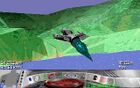 Frontier: First Encounters (Elite III) - 1995
 Elite: Dangerous - 2014


