

Osseus: Difference between revisions
from codex: maroon at Y for fractus/pellebantus, yellow at O for spiralis |
|||
| (16 intermediate revisions by 8 users not shown) | |||
| Line 1: | Line 1: | ||
[[File:Osseus Pumice.jpg|thumb|300px|right|Osseus Pumice]] | [[File:Osseus Pumice.jpg|thumb|300px|right|Osseus Pumice]] | ||
{{Quote|The Osseus species grows a single thick stalk from which emerges a wide, broadly circular, pitted endoskeleton. This structure is designed to dramatically increase the surface area of the organism, facilitating chemical capture and chemosynthesis on its catalytically active surface.|In-Game Description}} | {{Quote|The Osseus species grows a single thick stalk from which emerges a wide, broadly circular, pitted endoskeleton. This structure is designed to dramatically increase the surface area of the organism, facilitating chemical capture and chemosynthesis on its catalytically active surface.|In-Game Description}} | ||
'''Osseus''' is a | '''Osseus''' is a genus of alien organism found on [[planets]] and [[moons]] with thin atmospheres across the galaxy. They can be sampled with the [[Genetic Sampler]] and scanned with the [[Short Range Composition Scanner]]. They have a clonal colony range of 800m. | ||
== Description == | |||
Ossei are named after their bony skeleton. They are easy to confuse with round rocks and typically look like giant mushrooms from afar. Recognizable with Night Vision from 300m.<ref>CMDR VitoRazoR, [https://www.reddit.com/r/EliteDangerous/comments/123enkb/exobiology_a_2023_updated_guide/ Exobiology - a 2023 updated guide]</ref> | |||
==Types== | ==Types== | ||
There are six known types of Osseus: | There are six known morpho-types of Osseus with differing base values: | ||
{| class="fandom-table" | |||
!SPECIES | |||
!VALUE | |||
|- | |||
|Osseus Cornibus | |||
|1,483,000 | |||
|- | |||
|Osseus Discus | |||
|12,934,900 | |||
|- | |||
|Osseus Fractus | |||
|4,027,800 | |||
|- | |||
|Osseus Pellebantus | |||
|9,739,000 | |||
|- | |||
|Osseus Pumice | |||
|3,156,300 | |||
|- | |||
|Osseus Spiralis | |||
|2,404,700 | |||
|} | |||
== Distance == | |||
Minimum distance between two genetic samples: 800 m | |||
== Conditions of occurrence == | |||
* Planets with thin atmosphere | |||
* Only on Rocky, High Metal Content or Rocky Ice (for Osseus pumice) planets | |||
* Only present on rocky areas on planets | |||
* Maximum gravity: 0.27 | |||
{| class="fandom-table" | |||
!ATMOSPHERE TYPE | |||
!SPECIES | |||
|- | |||
|Methane, Methane-rich | |||
Argon, Argon-rich | |||
Nitrogen | |||
|Osseus Pumice | |||
|- | |||
|Ammonia | |||
|Osseus Spiralis | |||
|- | |||
|Carbon dioxide | |||
Carbon dioxide rich | |||
|Osseus Cornibus (180 K - 195 K) | |||
Osseus Fractus (180 K - 190 K) | |||
Osseus Pellebantus (190 K - 195 K) | |||
|- | |||
|Water, Water-rich | |||
|Osseus Discus | |||
|} | |||
== Osseus cornibus == | |||
[[File:Osseus Cornibus Turquoise.jpg|thumb|Osseus Cornibus Turquoise]] | |||
=== Description === | |||
''An osseus species that produces a stacked series of spiral structures up to about three metres. These ridged features are upturned to better absorb sunlight for photosynthesis.'' | |||
=== Conditions of occurrence === | |||
* Planets with thin Carbon dioxide atmosphere | |||
* Only on Rocky or High Metal Content planets | |||
* Only present on rocky areas on planets | |||
* Maximum gravity: 0.27 | |||
* Mean temperature between 180 K and 195 K | |||
=== Colored variants === | |||
Colored variant determined by the parent star type | |||
{| class="fandom-table" | |||
!STAR TYPE | |||
!COLOR | |||
|- | |||
|O | |||
| | |||
|- | |||
|B | |||
| | |||
|- | |||
|A | |||
|Lime | |||
|- | |||
|F | |||
|Turquoise | |||
|- | |||
|G | |||
|Grey | |||
|- | |||
|K | |||
|Indigo | |||
|- | |||
|M | |||
| | |||
|- | |||
|L | |||
| | |||
|- | |||
|T | |||
|Emerald | |||
|- | |||
|TTS | |||
|Green | |||
|- | |||
|Y | |||
| | |||
|- | |||
|W | |||
| | |||
|- | |||
|D | |||
| | |||
|- | |||
|N | |||
| | |||
|} | |||
== Osseus discus == | |||
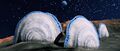
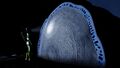
[[File:OsseusDiscus.jpg|thumb|Osseus Discus - blue]] | |||
=== Description === | |||
''An osseus that appears as half-buried discs with radial patterns, which may resemble natural rook formations from a distance. They absorb geothermal energy from below the surface as well as available heat sources above ground.'' | |||
=== Conditions of occurrence === | |||
*Osseus | * Planets with thin Water atmosphere | ||
*Osseus | * Only on Rocky or High Metal Content planets | ||
* | * Only present on rocky areas on planets | ||
*Osseus | * Maximum gravity: 0.27 | ||
*Osseus Spiralis | === Colored variants === | ||
Colored variant determined by rare material found on planet: | |||
{| class="fandom-table" | |||
!MATERIAL | |||
!COLOR | |||
|- | |||
|Cadmium | |||
|White | |||
|- | |||
|Mercury | |||
|Lime | |||
|- | |||
|Molybdenum | |||
|Peach | |||
|- | |||
|Niobium | |||
|Aquamarine | |||
|- | |||
|Tungsten | |||
|Red | |||
|- | |||
|Tin | |||
|Blue | |||
|} | |||
== Osseus fractus == | |||
[[File:Osseus fractus Turquoise.jpg|thumb|CMDR Warmind, Osseus fractus, Plio Euq WL-C D13-0, 6 F]] | |||
=== Description === | |||
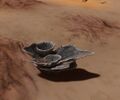
''This osseus species can grow to over six metres across. They produce wide ridged frills for metabolic interactions including aosorbing sunlight for energy production.'' | |||
=== Conditions of occurrence === | |||
* Planets with thin Carbon dioxide atmosphere | |||
* Only on Rocky or High Metal Content planets | |||
* Only present on rocky areas on planets | |||
* Maximum gravity: 0.27 | |||
* Mean temperature between 180 K and 195 K | |||
=== Colored variants === | |||
Colored variant determined by the parent star type | |||
{| class="fandom-table" | |||
!STAR TYPE | |||
!COLOR | |||
|- | |||
|O | |||
| | |||
|- | |||
|B | |||
| | |||
|- | |||
|A | |||
|Lime | |||
|- | |||
|F | |||
|Turquoise | |||
|- | |||
|G | |||
|Grey | |||
|- | |||
|K | |||
|Indigo | |||
|- | |||
|M | |||
| | |||
|- | |||
|L | |||
| | |||
|- | |||
|T | |||
|Emerald | |||
|- | |||
|TTS | |||
|Green | |||
|- | |||
|Y | |||
|Maroon | |||
|- | |||
|W | |||
| | |||
|- | |||
|D | |||
| | |||
|- | |||
|N | |||
| | |||
|} | |||
== Osseus pellebantus == | |||
[[File:Osseus pellebantus Turquoise.jpg|thumb|CMDR Fly34, Osseus pellebantus, Flyiedgai AP-Y d1-1, 8 e]] | |||
=== Description === | |||
''A species of osseus with a single broad stalk from which extend wide circular structures, with the largest plate capping the top to maximise sunlight absorption.'' | |||
=== Conditions of occurrence === | |||
* Planets with thin Carbon dioxide atmosphere | |||
* Only on Rocky or High Metal Content planets | |||
* Only present on rocky areas on planets | |||
* Maximum gravity: 0.27 | |||
* Mean temperature between 180 K and 195 K | |||
=== Colored variants === | |||
Colored variant determined by the parent star type | |||
{| class="fandom-table" | |||
!STAR TYPE | |||
!COLOR | |||
|- | |||
|O | |||
| | |||
|- | |||
|B | |||
| | |||
|- | |||
|A | |||
|Lime | |||
|- | |||
|F | |||
|Turquoise | |||
|- | |||
|G | |||
|Grey | |||
|- | |||
|K | |||
|Indigo | |||
|- | |||
|M | |||
| | |||
|- | |||
|L | |||
| | |||
|- | |||
|T | |||
|Emerald | |||
|- | |||
|TTS | |||
|Green | |||
|- | |||
|Y | |||
|Maroon | |||
|- | |||
|W | |||
| | |||
|- | |||
|D | |||
| | |||
|- | |||
|N | |||
| | |||
|} | |||
== Osseus pumice == | |||
[[File:Osseus Pumice - Yellow.png|thumb|Osseus Pumice - Yellow]] | |||
=== Description === | |||
''This osseus species grows a single thick stalk from which emerges a wide, broadly circular, pitted endoskeleton. This structure is designed to dramatically increase the surface area to volume ofthe organism, facilitating chemical capture and chemosynthesis on its catalytically active surface.'' | |||
=== Conditions of occurrence === | |||
* Planets with thin Argon, Methane or Nitrogen atmosphere | |||
* Only on Rocky, High Metal Content or Rocky Ice planets | |||
* Only present on rocky areas on planets | |||
* Maximum gravity: 0.27 | |||
=== Colored variants === | |||
Colored variant determined by rare material found on planet: | |||
{| class="fandom-table" | |||
!MATERIAL | |||
!COLOR | |||
|- | |||
|Antinomy | |||
|White | |||
|- | |||
|Polonium | |||
|Peach | |||
|- | |||
|Ruthenium | |||
|Gold | |||
|- | |||
|Technetium | |||
|Lime | |||
|- | |||
|Tellurium | |||
|Green | |||
|- | |||
|Yttrium | |||
|Yellow | |||
|} | |||
== Osseus spiralis == | |||
[[File:Osseus Spiralis - Turquoise.jpg|thumb|Osseus Spiralis - Turquoise]] | |||
=== Description === | |||
''A species of osseus that produces coiling spiral structures up to six metres wide. There are ridged folds on their upturned surfaces designed to capture sunlight.'' | |||
=== Conditions of occurrence === | |||
* Planets with thin Ammonia atmosphere | |||
* Only on Rocky or High Metal Content planets | |||
* Only present on rocky areas on planets | |||
* Maximum gravity: 0.27 | |||
=== Colored variants === | |||
Colored variant determined by the parent star type | |||
{| class="fandom-table" | |||
!STAR TYPE | |||
!COLOR | |||
|- | |||
|O | |||
|Yellow | |||
|- | |||
|B | |||
| | |||
|- | |||
|A | |||
|Lime | |||
|- | |||
|F | |||
|Turquoise | |||
|- | |||
|G | |||
|Grey | |||
|- | |||
|K | |||
|Indigo | |||
|- | |||
|M | |||
| | |||
|- | |||
|L | |||
| | |||
|- | |||
|T | |||
|Emerald | |||
|- | |||
|TTS | |||
|Green | |||
|- | |||
|Y | |||
|Maroon | |||
|- | |||
|W | |||
| | |||
|- | |||
|D | |||
| | |||
|- | |||
|N | |||
| | |||
|} | |||
==Locations== | ==Locations== | ||
| Line 21: | Line 399: | ||
!Reported By | !Reported By | ||
|- | |- | ||
|Eolls Priae ZQ- | |Eolls Priae ZQ-C d13-13 | ||
|10 D | |10 D | ||
| -22 | | -22.543, -123.6878 | ||
|Cornibus | |Cornibus | ||
|CMDR Methan Disery | |CMDR Methan Disery | ||
| Line 62: | Line 440: | ||
|Discus | |Discus | ||
|CMDR Methan Disery | |CMDR Methan Disery | ||
|- | |||
|Bleia Eohn KD-Z d1-64 | |||
|8H | |||
| -41.7510, -123.4087 | |||
|Fractus | |||
|CMDR GOM Collective | |||
|} | |} | ||
| Line 79: | Line 463: | ||
Osseus Spiralis Grey.png|Osseus Spiralis - Grey | Osseus Spiralis Grey.png|Osseus Spiralis - Grey | ||
File:Osseus Fractus - Indigo.jpeg|Osseus Fractus - Indigo | File:Osseus Fractus - Indigo.jpeg|Osseus Fractus - Indigo | ||
Osseus_Cornibus_Turquoise.jpg|Osseus Cornibus - Turquoise | |||
Osseus Fractus Turquoise 1.png|Osseus Fractus - Turquoise | |||
</gallery> | </gallery> | ||
| Line 87: | Line 473: | ||
[[Category:Alien life]] | [[Category:Alien life]] | ||
[[ru:Оссии]] | [[ru:Оссии]] | ||
[[zh:Osseus]] | |||
Latest revision as of 19:32, 6 December 2025

The Osseus species grows a single thick stalk from which emerges a wide, broadly circular, pitted endoskeleton. This structure is designed to dramatically increase the surface area of the organism, facilitating chemical capture and chemosynthesis on its catalytically active surface.
— In-Game Description
Osseus is a genus of alien organism found on planets and moons with thin atmospheres across the galaxy. They can be sampled with the Genetic Sampler and scanned with the Short Range Composition Scanner. They have a clonal colony range of 800m.
Description
Ossei are named after their bony skeleton. They are easy to confuse with round rocks and typically look like giant mushrooms from afar. Recognizable with Night Vision from 300m.[1]
Types
There are six known morpho-types of Osseus with differing base values:
| SPECIES | VALUE |
|---|---|
| Osseus Cornibus | 1,483,000 |
| Osseus Discus | 12,934,900 |
| Osseus Fractus | 4,027,800 |
| Osseus Pellebantus | 9,739,000 |
| Osseus Pumice | 3,156,300 |
| Osseus Spiralis | 2,404,700 |
Distance
Minimum distance between two genetic samples: 800 m
Conditions of occurrence
- Planets with thin atmosphere
- Only on Rocky, High Metal Content or Rocky Ice (for Osseus pumice) planets
- Only present on rocky areas on planets
- Maximum gravity: 0.27
| ATMOSPHERE TYPE | SPECIES |
|---|---|
| Methane, Methane-rich
Argon, Argon-rich Nitrogen |
Osseus Pumice |
| Ammonia | Osseus Spiralis |
| Carbon dioxide
Carbon dioxide rich |
Osseus Cornibus (180 K - 195 K)
Osseus Fractus (180 K - 190 K) Osseus Pellebantus (190 K - 195 K) |
| Water, Water-rich | Osseus Discus |
Osseus cornibus

Description
An osseus species that produces a stacked series of spiral structures up to about three metres. These ridged features are upturned to better absorb sunlight for photosynthesis.
Conditions of occurrence
- Planets with thin Carbon dioxide atmosphere
- Only on Rocky or High Metal Content planets
- Only present on rocky areas on planets
- Maximum gravity: 0.27
- Mean temperature between 180 K and 195 K
Colored variants
Colored variant determined by the parent star type
| STAR TYPE | COLOR |
|---|---|
| O | |
| B | |
| A | Lime |
| F | Turquoise |
| G | Grey |
| K | Indigo |
| M | |
| L | |
| T | Emerald |
| TTS | Green |
| Y | |
| W | |
| D | |
| N |
Osseus discus

Description
An osseus that appears as half-buried discs with radial patterns, which may resemble natural rook formations from a distance. They absorb geothermal energy from below the surface as well as available heat sources above ground.
Conditions of occurrence
- Planets with thin Water atmosphere
- Only on Rocky or High Metal Content planets
- Only present on rocky areas on planets
- Maximum gravity: 0.27
Colored variants
Colored variant determined by rare material found on planet:
| MATERIAL | COLOR |
|---|---|
| Cadmium | White |
| Mercury | Lime |
| Molybdenum | Peach |
| Niobium | Aquamarine |
| Tungsten | Red |
| Tin | Blue |
Osseus fractus

Description
This osseus species can grow to over six metres across. They produce wide ridged frills for metabolic interactions including aosorbing sunlight for energy production.
Conditions of occurrence
- Planets with thin Carbon dioxide atmosphere
- Only on Rocky or High Metal Content planets
- Only present on rocky areas on planets
- Maximum gravity: 0.27
- Mean temperature between 180 K and 195 K
Colored variants
Colored variant determined by the parent star type
| STAR TYPE | COLOR |
|---|---|
| O | |
| B | |
| A | Lime |
| F | Turquoise |
| G | Grey |
| K | Indigo |
| M | |
| L | |
| T | Emerald |
| TTS | Green |
| Y | Maroon |
| W | |
| D | |
| N |
Osseus pellebantus

Description
A species of osseus with a single broad stalk from which extend wide circular structures, with the largest plate capping the top to maximise sunlight absorption.
Conditions of occurrence
- Planets with thin Carbon dioxide atmosphere
- Only on Rocky or High Metal Content planets
- Only present on rocky areas on planets
- Maximum gravity: 0.27
- Mean temperature between 180 K and 195 K
Colored variants
Colored variant determined by the parent star type
| STAR TYPE | COLOR |
|---|---|
| O | |
| B | |
| A | Lime |
| F | Turquoise |
| G | Grey |
| K | Indigo |
| M | |
| L | |
| T | Emerald |
| TTS | Green |
| Y | Maroon |
| W | |
| D | |
| N |
Osseus pumice

Description
This osseus species grows a single thick stalk from which emerges a wide, broadly circular, pitted endoskeleton. This structure is designed to dramatically increase the surface area to volume ofthe organism, facilitating chemical capture and chemosynthesis on its catalytically active surface.
Conditions of occurrence
- Planets with thin Argon, Methane or Nitrogen atmosphere
- Only on Rocky, High Metal Content or Rocky Ice planets
- Only present on rocky areas on planets
- Maximum gravity: 0.27
Colored variants
Colored variant determined by rare material found on planet:
| MATERIAL | COLOR |
|---|---|
| Antinomy | White |
| Polonium | Peach |
| Ruthenium | Gold |
| Technetium | Lime |
| Tellurium | Green |
| Yttrium | Yellow |
Osseus spiralis

Description
A species of osseus that produces coiling spiral structures up to six metres wide. There are ridged folds on their upturned surfaces designed to capture sunlight.
Conditions of occurrence
- Planets with thin Ammonia atmosphere
- Only on Rocky or High Metal Content planets
- Only present on rocky areas on planets
- Maximum gravity: 0.27
Colored variants
Colored variant determined by the parent star type
| STAR TYPE | COLOR |
|---|---|
| O | Yellow |
| B | |
| A | Lime |
| F | Turquoise |
| G | Grey |
| K | Indigo |
| M | |
| L | |
| T | Emerald |
| TTS | Green |
| Y | Maroon |
| W | |
| D | |
| N |
Locations
| System | Planet | Coordinates | Type | Reported By |
|---|---|---|---|---|
| Eolls Priae ZQ-C d13-13 | 10 D | -22.543, -123.6878 | Cornibus | CMDR Methan Disery |
| Blae Eork WH-D c28-0 | B 2 A | -14.3765, -165.5567 | Fractus | CMDR Methan Disery |
| QQ Pegasi | 1 C | -25.0897, 77.8420 22.8682 47.1968 |
Pumice | CMDR R0ss |
| Manissyet | 6 A | 5.6067, -160.8237 | Pumice | CMDR R0ss |
| Kadaren | 6 B | -67.4296, 83.4881 | Pumice | CMDR R0ss |
| Nervi | 2 D | 60.0957, 9.8736 | Spiralis | CMDR R0ss |
| Plua Aewsy XS-S c4-9 | B 2 | -8.5853, 80.7811 | Discus | CMDR Methan Disery |
| Bleia Eohn KD-Z d1-64 | 8H | -41.7510, -123.4087 | Fractus | CMDR GOM Collective |
Notes
- The Osseus species was introduced in Elite Dangerous: Odyssey.
Gallery
-
 A commander standing near an Osseus Pumice
-
 Osseus Pumice - Yellow
-
 Osseus Discus - Blue
-
 Blue Osseus Discus and a commander
-
 Osseus Spiralis - Turquoise
-
 Osseus Spiralis - Indigo
-
 Osseus Pellebantus - Lime
-
 Osseus Pumice - Lime
-
 Osseus Spiralis - Grey
-
 Osseus Fractus - Indigo
-
 Osseus Cornibus - Turquoise
-
 Osseus Fractus - Turquoise


<verbatim>wk-style-navbox</verbatim>
<verbatim>wk-style-divclose</verbatim> <verbatim>wk-style-navbox</verbatim>
| Geology | |
| Biological sites |
|
| Xenological sites |
|
| Objects and Structures |
|
| Points of Interest marked with O are only available if Odyssey is installed. | |
<verbatim>wk-style-divclose</verbatim>
- ↑ CMDR VitoRazoR, Exobiology - a 2023 updated guide